

P40 vs P80 vs P120 Monoblock Valves: Matching Flow to Your Machine
Time : Oct 22, 2026 View : 42
Most monoblock directional control valve choices come down to one number: flow. KYDAC makes three sizes in the P series — the P40, the P80, and the P120 — and they differ mostly in how much oil they move. Get the size right and the cylinders run at speed with a low pressure drop. Get it wrong and the system runs hot, the attachments lag, and the relief valve works harder than it should.
This guide explains the three sizes in this line of monoblock directional control valves and which hydraulic machines each fits. Although all three have the same maximum working pressure rating of 250 bar, the main factor in choosing between the P40, P80, and P120 is flow.
Why Flow Drives the Size Choice
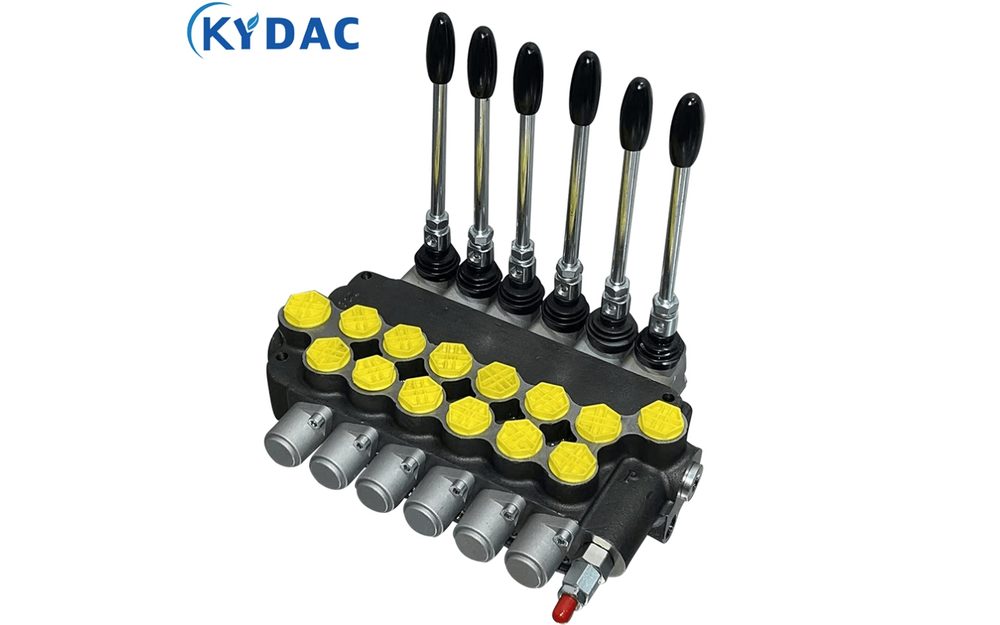
The figure shows a monoblock directional control valve feeding several actuators from a single cast body. The pump supplies oil flow to the valve, and the valve should be sized to handle the machine’s maximum expected flow. Matching the valve flow rating to the system helps avoid excessive pressure drop, while actual cylinder speed depends on the flow delivered to each actuator and the cylinder size.
Moving too much oil through a valve that is too small increases pressure drop and generates additional heat. Selecting a valve much larger than required can add size and cost without providing much benefit. A 120 L/min valve body can be used in a 40 L/min system if the circuit and connections are compatible, but it is usually unnecessary. The valve should be selected for the flow the pump is actually delivering, with a little margin on top.
P40, P80, and P120 at a Glance
The three sizes of KYDAC P series are all rated to 250 bar, as well as being cast iron monoblock valves. Flow is increased between the models, which are covered by the KYDAC P Series monoblock valves below.
| Attribute | P40 | P80 | P120 |
| Nominal flow | 40 L/min | 80 L/min | 120 L/min |
| Max working pressure | 250 bar | 250 bar | 250 bar |
| Body | Cast iron monoblock | Cast iron monoblock | Cast iron monoblock |
| Working sections | 1 to 7 | 1 to 7 | 1 to 7 |
| Operating temperature | -40 to +80 °C | -40 to +80 °C | -40 to +80 °C |
| Oil viscosity | 12 to 400 cSt | 12 to 400 cSt | 12 to 400 cSt |
| Typical machine | Forklifts, small loaders | Tractors, front loaders | Large tractors, harvesters |
All three have the same maximum working pressure rating of 250 bar. So deciding among them is based mainly on how much oil your machine moves and which unit you need on the other side of the valve.
Reading the P Series Ratings
These three sizes are all from the one body family, therefore a few numbers travel with all of these sizes. 250 bar working pressure is typical for mobile hydraulic applications. 1 to 7 working sections can be provided, depending on the number of functions required. The valve is rated for use down to -40°C and up to +80°C and can be used with oil of 12 cSt up to 400 cSt.
Section count is the flexible part. Count the functions you need — lift, tilt, dump, a set of rear remotes — and that number sets how many spools the valve carries. The flow rating sets the size. Those two numbers do most of the selecting.
Matching Each Size to a Machine
The P40 fits compact machines, such as forklifts, sanitation vehicles, and small wheel loaders. The P40 is intended for systems with flow requirements around its 40 L/min nominal rating. The function of the machine is to lift, tilt, etc. and possibly a few more additional functions, which need to be executed by the directional control valve. Compact is more important than big for these circuits.
P80 is our mid-range product, with an 80 L/min nominal flow rating. It is suitable for applications such as tractors, loaders, rear remotes, and other mobile hydraulic systems where this flow capacity is required. This is a typical application for P80 products from KYDAC, used to supply rear remote banks and loader arms on tractors.
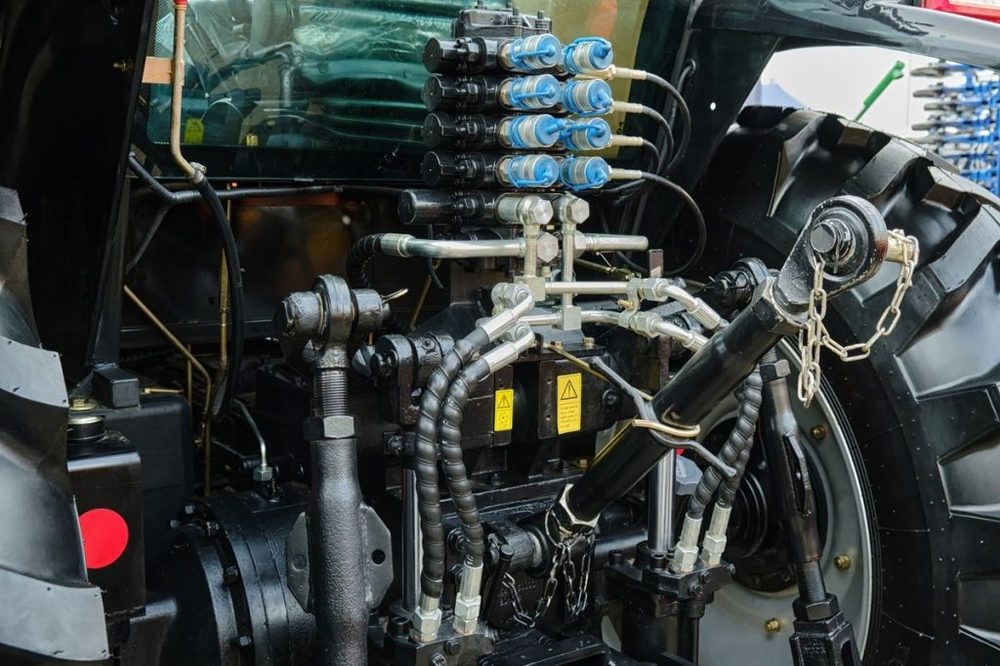
The P120 is designed for the big end of town. High-horsepower tractors, combine harvesters and large loaders are typical applications for the P120. On heavy-duty implements with large plows, folding harrows and grapples, the higher flow capacity of the P120 can reduce cylinder cycle times compared with an 80 L/min valve, provided the hydraulic system can supply the required flow. If the system requires more than the P120’s 120 L/min nominal flow rating, a higher-flow valve should be selected.
Monoblock Build and How It Holds Up
A monoblock directional control valve is a single cast iron item with the spool bore machined into it. As there are no jointed sections between the various circuits, it is less likely to leak than a conventional item used on a vibratory machine such as a tractor or yard machine operating in a field.
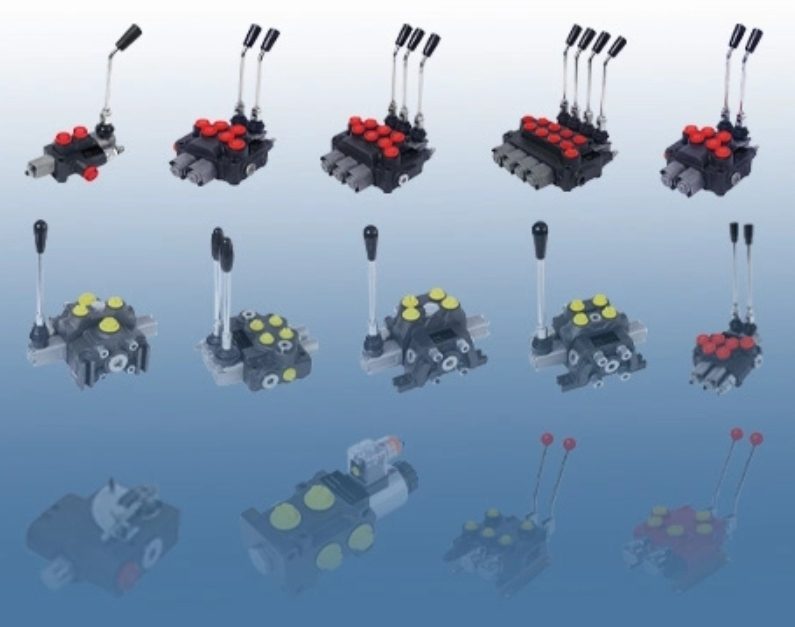
Our spools are carefully ground to fit within the bores closely to minimize the chance of internal bypassing. The P series can be supplied with 1 to 7 working sections depending on the number of functions required. Because it is a monoblock design, additional sections generally cannot be added to the same valve body later.
Do not assume that a P series valve is a direct replacement for a YUKEN, REXROTH, or VICKERS valve. Port sizes, mounting dimensions, circuit type, spool functions, pressure settings, and flow ratings should be checked before replacement.
Conclusion
A small machine with a 40 L/min pump would use a P40. A tractor or loader with rear remotes and loader control may use a P80 where the system flow matches its rating. High-horsepower machines like combines may use a P120 for the extra flow required. Flow determines the P-series body size, while all three models share the same 250 bar maximum working pressure rating.
Send the pump flow and the function count and the size narrows to one. For higher-flow or more complex multi-circuit applications, KYDAC also offers DCV series valves. The structure, flow rating, pressure rating, and number of sections should be checked for the specific DCV model. To review your circuit, send KYDAC the pump rating and the spool count.
FAQ
Q: What is the difference between the P40, P80, and P120?
These all have a maximum working pressure rating of 250 bar and use a cast iron monoblock body. The main difference between the models is the nominal flow rate: P40 = 40 L/min, P80 = 80 L/min, and P120 = 120 L/min. Note that this is the nominal flow rate and this needs to be compared to the actual flow rate of your pump.
Q: How do I decide how many sections I need?
Count the hydraulic functions the machine runs: lift, tilt, dump, and each rear remote. Each one usually takes a spool. The P series bodies are available with 1 to 7 sections, so select the number of sections according to the functions required. Adding more functions later may require an additional valve or a different valve body.
Q: Can a P series valve replace a YUKEN or REXROTH monoblock?
A P series valve may be suitable as a replacement in some hydraulic circuits, but compatibility must be checked first. Compare the port layout and threads, mounting dimensions, circuit type, spool functions, pressure rating, and required flow before replacement.
Q: What temperature and oil range do the P series valves run?
Suitable for use from -40°C to +80°C and for oil of viscosity 12 to 400 cSt. For normal service the viscosity range of 15 to 75 cSt is recommended. The hydraulic oil grade should be selected so that viscosity remains within the recommended range under the machine’s expected operating temperatures.
Leave a Message
If you are interested in any product, please contact us. We will introduce our products to you in more detail


