

How 2 Spool Hydraulic Valves Work A Comprehensive Technical Breakdown
Time : Mar 27, 2026 View : 454
Current engineering equipment requires the skill to manage various jobs at the same time. It must keep full strength and exact control. For instance, a unit might raise a big weight while adjusting a container. Or it could stretch a support while steadying a base. The smooth blend of these actions depends on a key part: the 2-spool hydraulic directional control valve.

As a leading professional hydraulic solutions provider, KYDAC is dedicated to providing high-quality and innovative hydraulic components that meet the rigorous demands of global industries
The Technical Core: How 2 Spool Hydraulic Valves Operate
A 2-spool valve serves as the main spot for spreading pressurized hydraulic fluid. It includes a valve housing with two spools that move on their own. These spools are carefully shaped cylinders. They glide inside the valve opening to guide oil flow from the pump to different actuators.
Understanding Spool Dynamics and Port Logic
Each spool usually handles one hydraulic loop, such as a cylinder or motor. When the spool sits in the “neutral” spot, the flow gets blocked or rerouted, based on the setup.
- The Shift: An operator shifts the control handle. Then, the spool moves. It lines up inner slots with certain ports.
- Port Functionality: The fluid comes in via the P (Pressure) port. It passes through the spool’s control edges to the A or B (Working) ports. Finally, it heads back to the tank via the T (Tank) port.
- Precision Metering: Top-grade valves, like those from KYDAC, have detailed control notches. These let the operator adjust the actuator speed by changing the handle’s reach. As a result, it stops rough, sudden shifts that might harm the gear.
Open Center vs. Closed Center Systems
The “center” setup decides how the valve acts when the handles stay idle:
- Open Center: This type pairs well with fixed-output pumps. In neutral, oil moves straight from the pump to the tank. That cuts down on warmth in the system and saves power.
- Closed Center: It often works with adjustable-output pumps. In neutral, all ports close off. This keeps steady pressure in the lines for quick reactions.

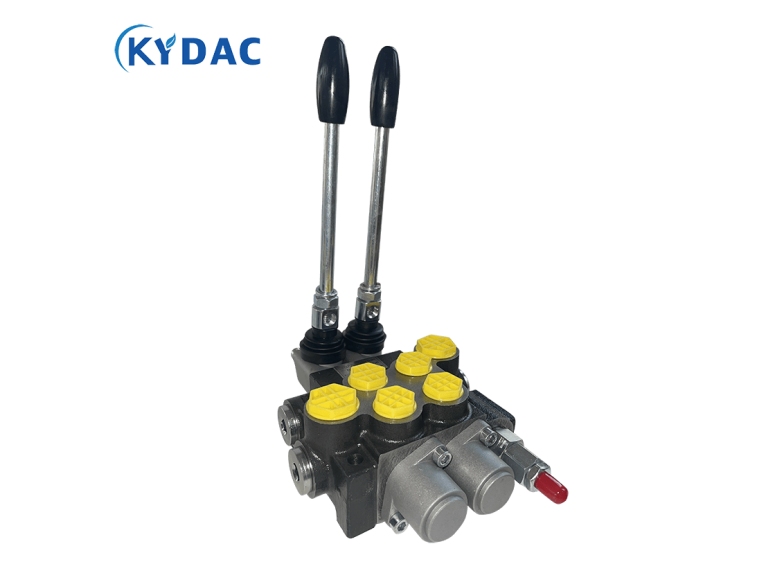
Primary Types of 2 Spool Control Valves
Picking the correct valve design matters a lot. It helps balance price, room, and toughness.
Monoblock Valves: The Strength of Unified Casting
The monoblock style, such as the KYDAC Precision Control Hydraulic Monoblock Valve Solution, puts both spools in one solid cast-iron unit.
- Leak Prevention: With no connections between parts, the chance of outside leaks drops almost to zero.
- Compact Footprint: These suit mobile units where space runs tight.
- Pressure Resistance: The single-piece build takes strong hydraulic jolts better than joined-up versions.
Sectional Valves: Modular Flexibility for Complex Builds
Sectional valves come from separate pieces fastened together. They give room to add extra spools down the line. But they need solid seals between parts to stop hydraulic oil from seeping. For basic two-task jobs, the monoblock type stands out as the better pick for steady performance.
Practical Application Scenarios: Solving Field Challenges
Specs on paper hold little value without ties to actual use. Here, 2-spool valves tackle certain work issues.
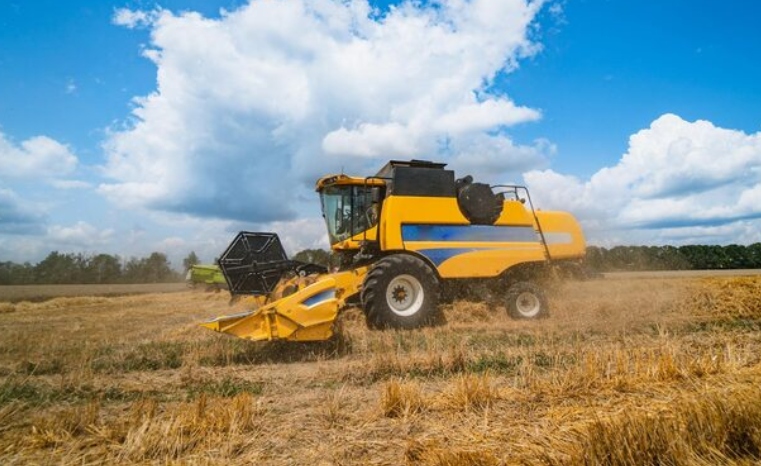
Agricultural Loaders: Managing Lift and Tilt Cycles
In a front loader, one spool runs the lift arms. The other deals with bucket angle.
- The Problem: Weaker valves often face “pressure mix-up.” When you shift the angle handle, it might make the lift arms dip a bit.
- The Solution: A KYDAC P80 series valve with parallel paths keeps pressure even across spools. This allows easy, joint actions. It also fixes delays in order and boosts loading speed.
Construction Equipment: Precision Control in Mini-Excavators
Small diggers use 2-spool setups, often within bigger valve sets, to handle the boom and arm.
- The Problem: Weight shift. When a digger holds a heavy item up, leaks inside the valve can let the arm drop slowly.
- The Solution: The KYDAC DCV series features very close fits and strong cast iron. This cuts the inner flow bypass. As a result, the weight stays right where it is set. It handles key safety and exactness matters at work sites.
The KYDAC Advantage: High-Performance Hydraulic Solutions
KYDAC stands as a skilled supplier of hydraulic solutions and a top creator of tailored hydraulic parts. With more than 200 field specialists and a focus on smart digital production, we supply system options that match world rules.
Engineering Excellence in the P40 and P80 Series
Our P series multi-way directional valves (including the P40, P80, and P120) set the standard for moving hydraulics.
- Integrated Safety: Each valve has a changeable inner relief valve. It guards your pump and actuators against pressure jumps.
- Custom Spools: We provide different spool kinds (double acting, single acting, or “float” positions) fitted to your exact equipment.
- High Flow Capacity: The P80 manages up to 80L/min. This makes it great for tough farm and factory duties.
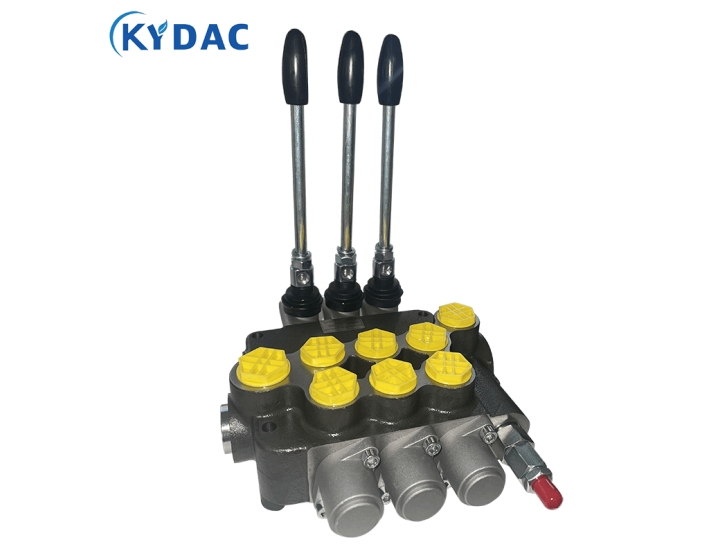
Durability Features of the DCV Series
For greater pressure needs, the KYDAC DCV series (from DCV20 to DCV140) offers sturdy flow control.
- Material Integrity: High-quality materials keep the valve housing from bending under strong pulses or harsh heat.
- Versatile Control: Choices cover hand operation, wire pull, air-driven, or SD series electromagnetic control for automatic setups.
- Corrosion Resistance: Our valves get protective layers to stand up to rough settings in building and sea-based work.
Conclusion: Optimizing Your Hydraulic Infrastructure
Your hydraulic setup runs only as well as its weakest valve. With a precise 2-spool valve in place, you cut fuel use, boost worker safety, and lengthen the life of pumps and motors. KYDAC stays committed to offering solid and fresh hydraulic solutions. These meet the changing demands of the worldwide engineering equipment field.
Take the Next Step in Hydraulic Precision
Avoid letting weak valves hold back your work. Contact us and check out the KYDAC selection of monoblock and solenoid valves now. Our skilled group is set to offer custom answers for your build or swap needs.
- Email: Maria@shangjiayeya.com
- Phone/WhatsApp: +86 15830130792
FAQ
Q: How do I choose between a P40 and a P80 series valve?
A: Choice depends on flow speed. A P40 takes up to 40L/min, good for small tractors or wood cutters. A P80 deals with 80L/min, built for bigger building tools and high-flow farm add-ons.
Q: Can I use a 2-spool valve to control a hydraulic motor?
A: Yes. But for motors, you often need a “Motor Spool” (G-type) that lets ports open to the tank in neutral. This stops the motor from halting in a way that causes harm.
Q: Why does my hydraulic valve get extremely hot during operation?
A: This often points to a big “pressure drop.” If the valve is too small for the pump’s output, fluid pushes through tight paths at fast speeds. That turns pressure into lost heat.
Q: Is it possible to convert an Open Center valve to a Closed Center?
A: Some KYDAC types allow this with a “Power Beyond” or “Closed Center Plug.” It changes the inner flow path without needing a whole new valve unit.
Leave a Message
If you are interested in any product, please contact us. We will introduce our products to you in more detail


