

Hydraulic Solenoid Valves: Ultimate Guide & Testing Tips
Time : Jun 26, 2026 View : 140
In the tough field of fluid power, keeping machines running depends a great deal on how well your control parts work. Whether you run heavy construction gear or oversee a busy production line, knowing the details of your directional valves and how to check them helps avoid expensive stops in work.
As a top original equipment manufacturer (OEM) focused on strong fluid power systems, KYDAC supplies high-quality hydraulic control valves, solenoid valves, and compact gear pumps built to handle rough conditions. This guide explains the main ideas behind hydraulic solenoid valves. It shows how KYDAC models address common machine problems and gives clear steps to test valves properly.
Understanding Hydraulic Solenoid Valves: Types & Functions
Hydraulic solenoid valves connect electronic signals to the force of moving fluid. An electromagnetic coil moves an inner spool, which directs oil flow, controls pressure, and manages volume.
Direct-Acting vs. Pilot-Operated Solenoid Valves
The choice of valve type comes down to system pressure and flow needs in your setup.
- Direct-Acting Valves: The coil moves the spool straight away. These suit smaller flows or tight spaces that need quick action.
- Pilot-Operated Valves: The solenoid starts the process, and system pressure handles the main spool. They manage large flows under high pressure without trouble.
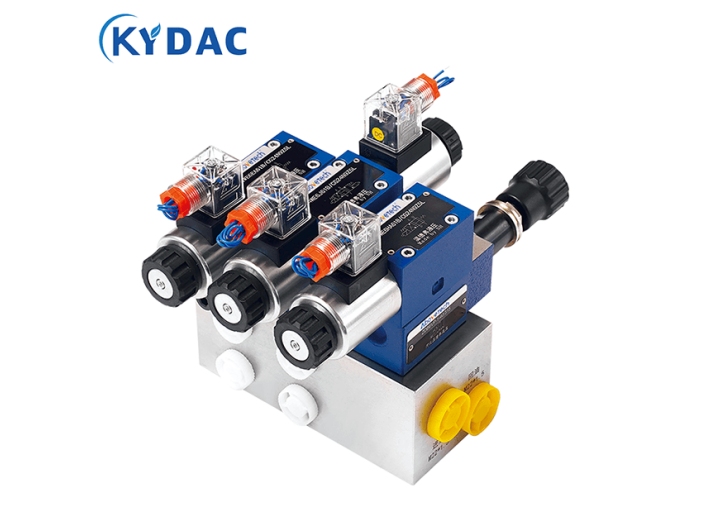
- The KYDAC Advantage: KYDAC’s DRVP6-40 and DVP6-40 solenoid valves offer fast response from electrical signal to mechanical movement. They give steady flow control and reliable performance even when conditions change quickly on job sites.
Monoblock and Multi-Way Valve Integration
Modern equipment often needs several circuits working together from one control point.
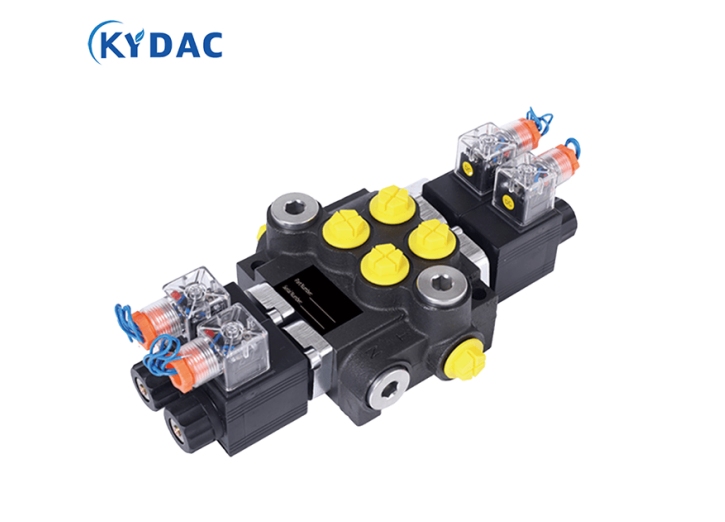
- Space-Saving Blocks: Combining solenoid controls into monoblock or multi-way assemblies cuts down on pipes, reduces possible leak spots, and keeps circuits protected.
- The KYDAC Solution: The SD Series Electromagnetic Controlled Directional Control Valves and SVV06 Series Multi-Way Directional Valves let operators control multiple actuators at once with good accuracy and no unwanted pressure changes between circuits.
Where KYDAC Valves Solve Crucial Challenges
These valves do important work every day on job sites and in factories. KYDAC builds its products to fix specific issues that come up in daily operations across different fields.
Heavy Construction Machinery
Excavators, loaders, and other special vehicles need steady power adjustments when temperatures vary during long shifts.
- The Challenge: Jerky movements or drifting in the boom during heavy lifts at high pressure.
- The Solution: KYDAC SD Series directional control valves deliver smooth, fine adjustments to the spool. Operators gain better command over attachments and avoid internal leaks that could cause sudden drops.
Smart Agricultural Equipment
Machines like baling equipment and harvesters rely on quick automation to finish work during tight harvest windows.
- The Challenge: Slow reactions in automatic triggers or sorting gates that result in damaged crops or blockages.
- The Solution: The Green Storage Baling Machine Special Valve Group Series from KYDAC responds fast to signals. Baling and wrapping actions start right away, which raises overall output during busy periods.

Industrial Automation and Machinery
Assembly lines, robotic arms, and handling systems depend on steady, repeated cycles throughout the day.
- The Challenge: Valves heat up and wear faster from constant high-speed use.
- The Solution: The DRVP6-40 series uses tough internal spools and responsive coils. They stay stable through thousands of cycles, which reduces the number of maintenance stops on the line.
How to Test a Hydraulic Solenoid Valve: A Step-by-Step Field Guide
When a machine stops, it can often be difficult to determine whether the fault is electrical or hydraulic in nature. Here are some steps to aid diagnosis.
Electrical Diagnostic Testing
Begin on the electrical side of the valves before you start to open up the connections on the hydraulic side.
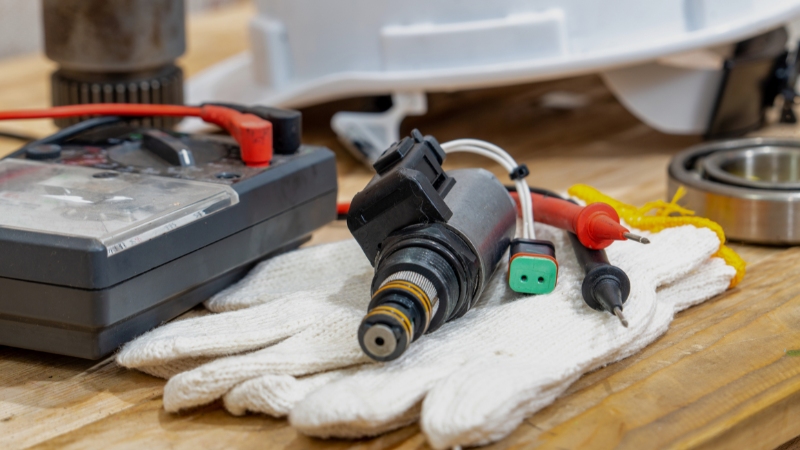
- Step 1: Check Voltage Supply: Disconnect the plug from the coil and use a multimeter. Operate the controls and confirm the voltage matches what the coil needs, such as 12VDC, 24VDC, or 220VAC.
- Step 2: Perform a Resistance Test: Connect your multimeter to measure ohms between the two coil pins. Measuring an infinite resistance could indicate a burned-out coil. A short would be measured at 0 ohms.
- Step 3: The Magnetic Test: Hold a screwdriver near the top of the coil when it is powered up. A strong magnetic pull indicates that the part is working.
Mechanical and Hydraulic Performance Inspection
Stuck parts or dirty fluid may be the cause of the problem if the electricity checks pass.
- Step 1: Manual Override Overrun: Many good valves have a manual pin. Push the pin in with a tool whilst pressure is applied to the valve. If the valve moves, then the fault lies within the electrical control system.
- Step 2: Inspect for Spool Sticking: Shut down the system. Remove the cartridge carefully. Inspect spool for varnish, metal shreds, etc. Check for any scratching on the spool.
- Step 3: Check Return Springs: Inspect for any signs of weakness or wear of internal return springs. Weak springs will not return the spool to the neutral position, resulting in a drill.
Common Fault Symptoms and Solutions
Spotting typical failure signs helps fix problems without wasted effort.
Symptom: Valve Fails to Shift
- Cause: Burned coil or spool jammed by dirty fluid.
- Fix: Swap the coil or clean the valve body and flush the lines.
Symptom: Actuator Sluggishness or Drifting
- Cause: Worn seals or damaged spool surface.
- Fix: Replace seals or install a precise KYDAC replacement cartridge.
Maximize Your System Efficiency with KYDAC
Poor valve performance should not hold back your operations. KYDAC draws on more than 24 years of manufacturing know-how and uses advanced lines from Germany and Japan. The company produces standard DVP6-40 solenoid valves as well as fully custom multi-way groups. This ensures machines keep running reliably day after day.
Ready to improve your equipment or talk about custom OEM needs? Reach out to KYDAC at Maria@shangjiayeya.com or on WhatsApp at +86 15830130792 for practical advice.
FAQ
Q: What causes a hydraulic solenoid valve coil to burn out repeatedly?
A: Voltage changes often play a role here. Wrong duty cycles contribute as well. Too much heat around the valve adds to the issue. Dirty fluid can jam the spool. The coil then pulls extra current. This leads to quick overheating in a short time.
Q: How often should hydraulic directional control valves be inspected?
A: For typical industrial and farm work, check visually every 500 hours. It makes sense to run full pressure and filter tests every 2,000 hours. This approach helps spot wear before it grows into larger issues over time.
Q: Can I use a 12VDC solenoid coil on a valve body originally rated for 24VDC?
A: No. The bodies stay the same in most cases. Coils must match the system voltage exactly, though. A 12VDC coil in a 24VDC setup burns out right away from too much current flowing through it.
Q: What is the primary indicator that a monoblock valve has internal leakage?
A: Look for actuators that drift without command under load. Lower overall system pressure may show up as well. Hot spots on the valve block often appear in these situations too.
Leave a Message
If you are interested in any product, please contact us. We will introduce our products to you in more detail


