

Optimize Hydraulic Efficiency: 2-Way vs. 3-Way Control Guide
Time : Apr 24, 2026 View : 220

Heavy-duty engineering and industrial manufacturing rely on solid hydraulic performance. This performance separates reliable equipment from expensive breakdowns. The core choice boils down to picking the correct control valve.
Plenty of setups handle well with a basic 2-way valve. But when operations grow trickier, and power expenses climb, knowing the moment to move to 3-way control matters a lot. KYDAC stands out as a top maker of exact hydraulic parts. The company focuses on filling this skill gap through sturdy valves built for the harshest settings around the globe.
Understanding the Basics: 2-Way vs. 3-Way Valves
You need to grasp the working setup of these parts before choosing to change.
Mechanical Structure and Flow Logic of 2-Way Valves
The 2-way valve provides the most straightforward fluid management. It includes two ports: one inlet and one outlet. The main job is on/off regulation.
- Action: When open, fluid flows; when closed, fluid is blocked.
- Efficiency: It works well for straightforward blocking and shielding later parts from sudden pressure rises.
- KYDAC Insight: Our 2-way hydraulic solenoid valves come with improved inner channels. These cut pressure loss during full flow.
The Advanced Circuit Control of 3-Way Valves
The 3-way valve brings in a third port. This port often serves as an exhaust or return path to the tank.
- Action: It can direct fluid from an inlet to one of two different outlets, or block the inlet while allowing the actuator port to vent to the tank.
- Logic: This setup supports “Directional Control.” It lets one valve manage both the push and the pull-back of a cylinder, whether by gravity or spring.
When to Stick with 2-Way Control?
Every system does not require the added layers of a 3-way valve. For some high-pressure safety tasks, the basic nature of a 2-way valve offers its best advantage.
Simple On/Off Requirements and Safety Isolation
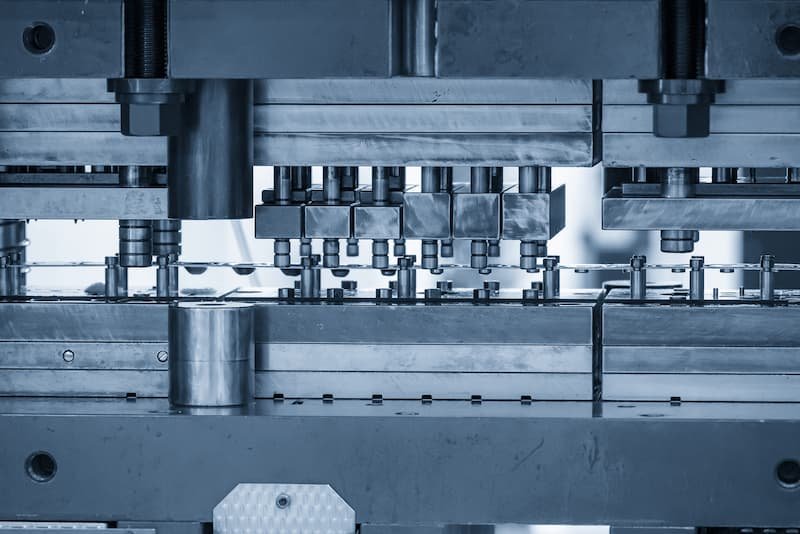
Many hydraulic power units (HPUs) just call for stopping the flow. This keeps the machine still during upkeep.
- Application: Emergency shut-off systems in industrial presses.
- Benefit: Fewer spots for leaks and better strength under intense pressure.
KYDAC’s High-Pressure Solenoid Series for Safety Lock
KYDAC offers targeted 2-way solenoid valves. These are used heavily in construction machinery safety locks.
- Features: Our valves feature high-strength alloy housings and precision-ground spools.
- The Solution: In excavators, these valves stop unwanted boom shifts by sealing the pilot oil line. The 2-way build guarantees no leakage. It fixes “drift” issues, where a heavy arm drops bit by bit from fluid sneaking past inside.
Maximizing Efficiency: When to Switch to 3-Way Control
When your gear runs repeated loops or demands exact pressure release, a 2-way valve can waste power. It might also make parts run hot.
Managing Single-Acting Actuators and Pressure Relief
For single-acting cylinders, which push out with oil but pull back by spring or weight, the 3-way valve sets the standard for control.
- Problem: Using two 2-way valves for this gets bulky. It is hard to time them right.
- Solution: One 3-way valve sends oil to the cylinder for extension. Then it switches to link the cylinder port to the tank for pull-back.
- Efficiency: This cuts the trapped oil volume under pressure. As a result, it lowers heat buildup.
Optimizing Agricultural Machinery with KYDAC SVV06
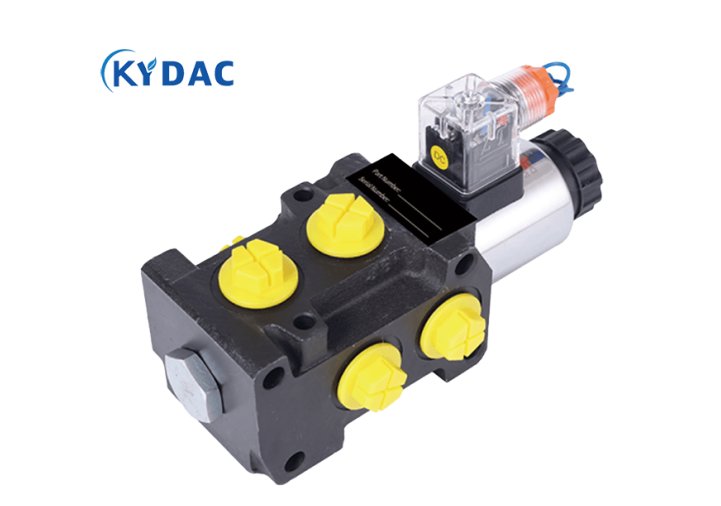
In farming, especially with tractor add-ons, the KYDAC SVV06 Series Multi-Way Directional Valves change the game.
- A farmer needs to control a tipping trailer.
- The KYDAC Advantage: The SVV06 allows the user to divert flow between two different circuits (e.g., from a steering circuit to a lifting circuit) seamlessly.
- Problem Solved: It eliminates the need for complex plumbing. By switching to our 3-way logic, the operator gains “precision control.” This lets the trailer bed lower smoothly, without the sudden jerks seen in weaker valve systems.
Technical Deep Dive: Key Factors for Choosing Your Valve
Picking between 2-way and 3-way goes beyond port count. It hinges on specs that fit your system’s demands.
Flow Rates, Pressure Ratings, and Response Times
- Flow Capacity: Make sure the valve manages your pump’s top GPM (Gallons Per Minute). KYDAC’s DCV Series (like the DCV100) suits high-flow spots up to 100L/min. It avoids any system bottlenecks.
- Pressure Duty: Engineering machinery often operates at 250-350 bar. Our ZDL Series valves undergo rigorous fatigue testing to handle these pulsated loads for over 1 million cycles.
- Response Time: For automated production lines, milliseconds matter. KYDAC solenoid valves utilize high-performance electromagnetic coils that provide instantaneous shifting, solving the problem of “lag” in automated sorting or robotic arms.
How KYDAC Customizes OEM Solutions for Global Manufacturers
With over 24 years of experience, KYDAC understands that a “standard” valve isn’t always the answer. We provide customized OEM services where our 30+ hydraulic engineers modify spool configurations, port sizes (G, SAE, or NPT), and voltage requirements to fit your specific chassis or power pack. Whether you are in North America, Europe, or Southeast Asia, our ISO/TS16949 certified manufacturing ensures every part is an “original quality” component. In daily operations, this means valves that last through 500,000 cycles in dusty fields, drawing from years of on-site feedback to tweak designs for real-world stress.
Conclusion
Selecting a 2-way or 3-way valve shapes your hydraulic system’s life span and power use. 2-way valves fit basic blocking and safety needs, but 3-way valves open doors to better automation and actuator handling.
At KYDAC, we don’t just sell parts; we provide the fluid power expertise to help you build better machines. From our durable BDL Series to our precision LKF flow control valves, we have the inventory and engineering support to elevate your hydraulic performance.
Ready to optimize your hydraulic circuit?
Contact us today for a free consultation on valve selection and OEM customization. Let KYDAC be the reliable heart of your hydraulic system.
FAQ
Q: Can a 3-way valve be used as a 2-way valve?
A: Yes, by plugging one of the outlet ports, but it is often less cost-effective and may cause unnecessary turbulence in the valve body.
Q: What is the most common cause of failure in 3-way directional valves?
A: Fluid contamination. Small particles can score the precision-ground spool, leading to internal leakage between the pressure and tank ports.
Q: How do I determine the correct port size for my KYDAC valve?
A: You must match the port size to your system’s flow velocity. Too small a port increases heat; too large a port may reduce pressure responsiveness. Our engineers can provide a flow-velocity chart upon request.
Q: Why choose a solenoid-operated valve over a manual lever valve?
A: Solenoid valves allow for remote operation and integration with electronic control units (ECUs), which is essential for modern “smart” engineering machinery.
Q: Does temperature affect the shifting speed of these valves?
A: Yes, extreme cold increases oil viscosity, which can slow response times. KYDAC spools are designed with specific tolerances to maintain reliable shifting even in harsh Eurasian winter conditions.
Leave a Message
If you are interested in any product, please contact us. We will introduce our products to you in more detail


