

How Does a 4-Way Hydraulic Valve Work: Boost System Efficiency
Time : Jul 16, 2026 View : 105
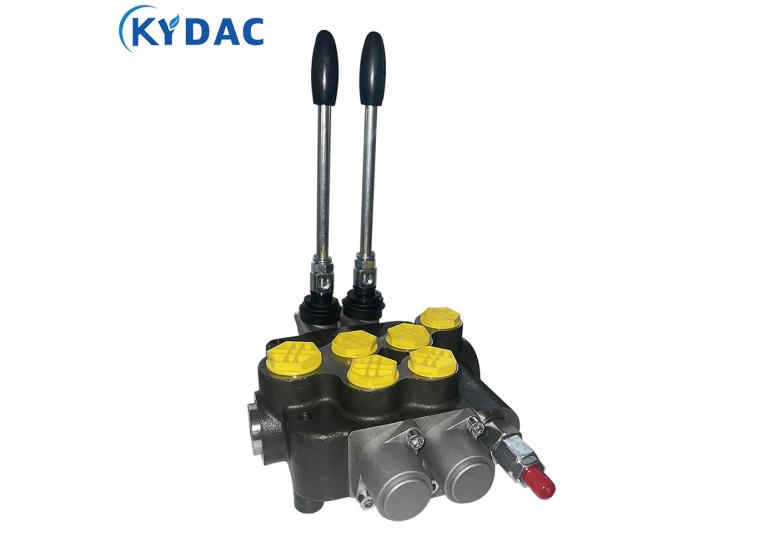
In the tough field of heavy machines and factory automation, good control of fluid power shapes how well the whole setup runs, how safe it stays, and how long it lasts. The directional valve sits at the center of this control. Among these, the 4-way hydraulic valve acts as the main part for operating double-acting cylinders and motors. Engineers and equipment makers need a valve that switches flow smoothly even under very high pressure. KYDAC brings more than twenty years of building experience to this. The company makes top hydraulic control valves, solenoid valves, and check valves that fit these demands exactly. This guide explains how 4-way hydraulic valves operate inside and shows why current system plans depend so much on how well they are built.
Understanding the Core Mechanics of a 4-Way Hydraulic Valve
It helps to know how fluid moves through the valve body before looking at how these parts support bigger machines.
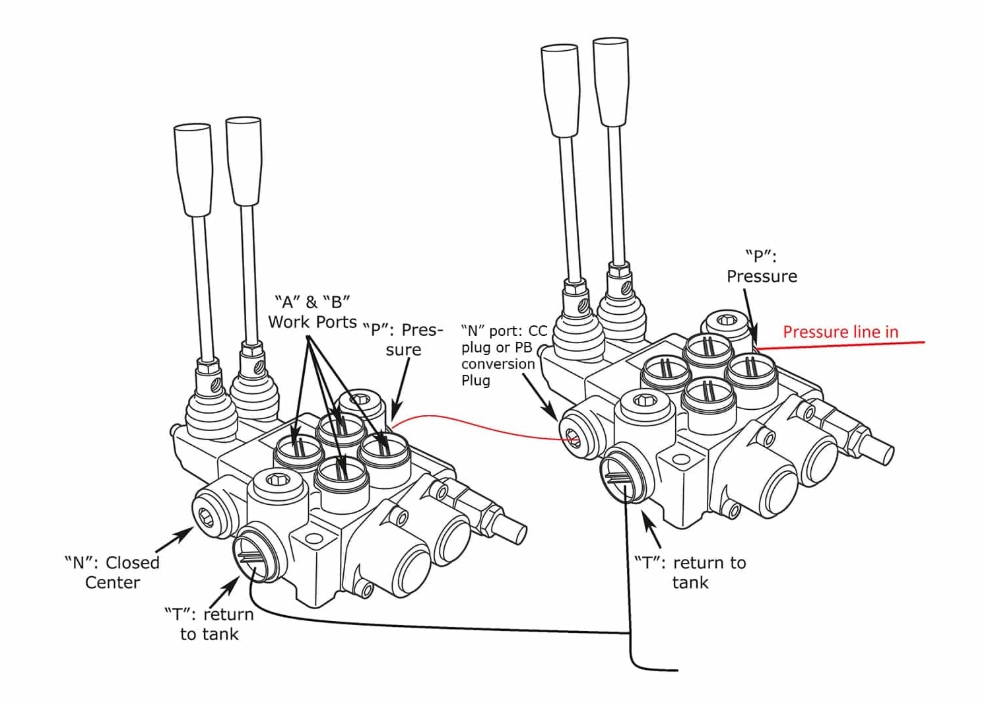
The 4-Port Configuration Explained
A typical 4-way directional valve has four separate ports that guide pressurized fluid in a careful way.
- P Port (Pressure): This main inlet connects straight to the line from the hydraulic pump.
- T Port (Tank/Return): This port sends lower-pressure fluid back to the tank or through the hydraulic oil cooler.
- A Port (Working Port A): This connects to one end of a double-acting cylinder or one side of a hydraulic motor.
- B Port (Working Port B): This connects to the other chamber of the cylinder or the second inlet on the motor.
Spool Movement and Flow Path Directional Control
The valve spool inside moves to block or open these ports so the actuator can change direction.
- Neutral Position: In a common closed-center setup, the spool covers all ports and keeps the cylinder steady in place.
- Forward Shift (P to A / B to T): When the spool moves one way, high-pressure oil flows into Port A to extend the cylinder while Port B releases fluid back to the tank.
- Reverse Shift (P to B / A to T): Shifting the spool the other direction sends oil into Port B to pull the cylinder back and lets Port A drain to the tank.
Why Advanced System Design Depends on High-Quality 4-Way Valves
Current designs need more than plain fluid routing. They call for accurate flow control, good energy use, and no leaks inside even when loads get very heavy.
Eliminating Pressure Drops and Optimizing Energy Efficiency
Cheap valves create too much friction and narrow paths inside. This leads to extra heat and big losses in power.
- Precision Monoblock Castings: KYDAC handles this with the P40 and P80 Series Precision Hydraulic Monoblock Valves. These have channels inside shaped to improve flow and cut pressure drops by as much as 15 percent.
- Tight Machining Tolerances: Special boring methods create very small gaps between the spool and housing. This greatly reduces any leakage that slips past.
- Reduced Thermal Load: Smooth flow keeps things from heating up too much. That puts less work on the separate hydraulic air oil coolers in the system.
Managing Simultaneous Multi-Actuator Control Without Interference
Big machines often run several cylinders and motors at once. They must do this without one part stealing power from another.
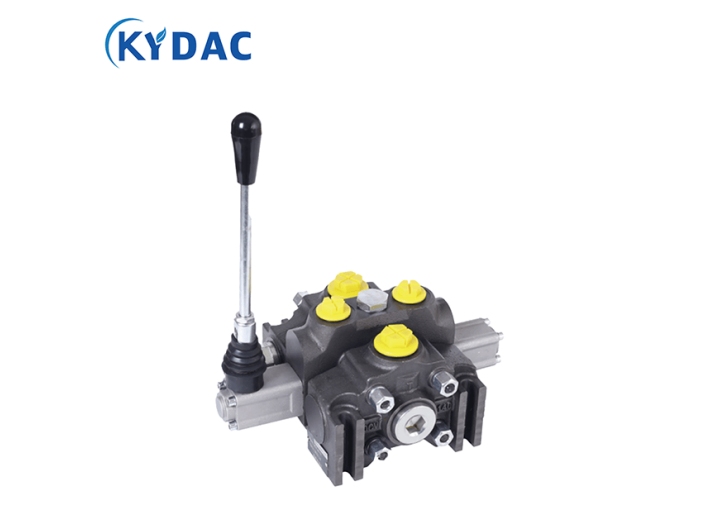
- Advanced Sectional Architecture: The KYDAC DCV100 and DCV140 Series Multi-Way Directional Control Valves use parallel circuits. This gives separate flow to different machine tasks.
- Integrated Load-Holding Valves: Every section has its own check valve. It stops fluid from flowing back the wrong way so a pressure jump in one area does not affect the load in another.
- Responsive Automation: On automated lines, the SD Series Electromagnetic Controlled Directional Valves react in milliseconds. They make quick and steady flow splitting possible.
Industrial Application Scenarios: Where Theory Meets Real-World Performance
Strong 4-way valves show their worth in rough outdoor conditions. There, any stoppage can cost a lot of money each hour.
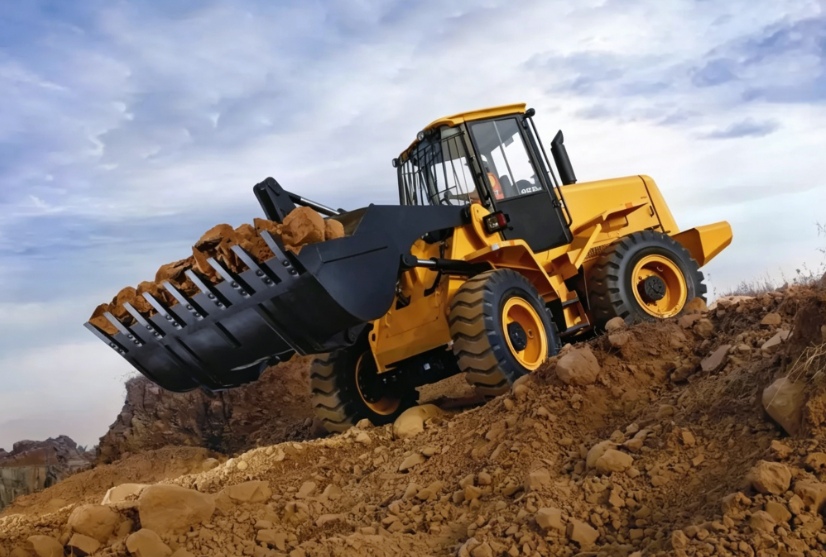
Heavy Construction Machinery and Excavator Control
Excavators and backhoes count on multi-circuit directional valves for digging, swinging, and lifting heavy loads all at the same time.
- The Problem Solved: Ordinary valves can cause uneven motion or slow drifting. This creates risks like sudden drops of the boom during work.
- The KYDAC Solution: With the KYDAC P80 and DCV100 Series, operators get steady, measured control when extending the boom or tilting the bucket.
- System Reliability: Cast-iron bodies and spools with hard chrome plating stand up to impulse pressures as high as 31.5 MPa. They stop drifting and help keep work safe on the site.
Precision Agricultural Machinery and Front-End Loaders
New tractors and harvesting machines need accurate auxiliary hydraulic valves for things like steering connections, seed drills, and front loaders.
- The Problem Solved: Farm gear works in dirty, wet places full of dust and water that can stick a spool if the seals are not good.
- The KYDAC Solution: The ZT-L12 and ZDL20 Series Monoblock Valves come with solid dust seals and lever controls made for moving equipment.
- Operation Longevity: These valves deliver exact leveling of tools and fast pulling back of attachments. Farmers can keep machines going through long harvest periods without the hydraulics slowing or stopping.

Conclusion
A 4-way hydraulic valve does more than switch directions. It controls how quickly the machine answers, how much power it uses, and how dependable it stays over time. Choosing good control valves helps equipment run in smooth cycles, waste less heat, and last longer overall. At KYDAC, production lines use modern machines brought in from Germany and Japan. A strict ISO/TS16949 quality system backs everything, along with a two-year warranty that stands out in the field.
Are you looking to improve hydraulic performance on your machines, lower pressure losses, or build a steady supply of OEM parts? Reach out to the team at KYDAC. Send a message to Maria@shangjiayeya.com or contact us via WhatsApp at 8615830130792. Get a custom technical talk and quote for your next project.
FAQ
Q: What is the primary difference between a 3-way and a 4-way hydraulic valve?
A: A 3-way valve directs flow for single-acting cylinders. It supplies one pressure line along with a return path. A 4-way valve works differently with double-acting cylinders, switching pressure between two ports at once.
Q: Why does a hydraulic system lose speed and experience overheating when using a low-quality directional valve?
A: Lower-grade valves usually contain rough passages and loose clearances inside. These features create extra friction for the fluid, larger pressure losses, and internal leaks. The leaks turn useful power into heat, which slows the machine and raises temperatures during operation.
Q: How do load-holding check valves inside a multi-way valve block improve safety?
A: Load-holding check valves sit inside the valve block. They stop high-pressure oil from moving back into the main gallery when several spools move at the same time. Heavy loads therefore remain steady and avoid sudden drops.
Q: What are the main benefits of using an electromagnetic solenoid valve over manual lever control in hydraulic machinery?
A: Solenoid valves offer clear advantages over manual levers. They support remote control and connect easily to electronic units. Response happens in milliseconds, which helps run automatic sequences on modern production lines.
Related News
Leave a Message
If you are interested in any product, please contact us. We will introduce our products to you in more detail


