

Mastering 4-Way Hydraulic Valves: Boost Machinery Efficiency
Time : May 29, 2026 View : 139
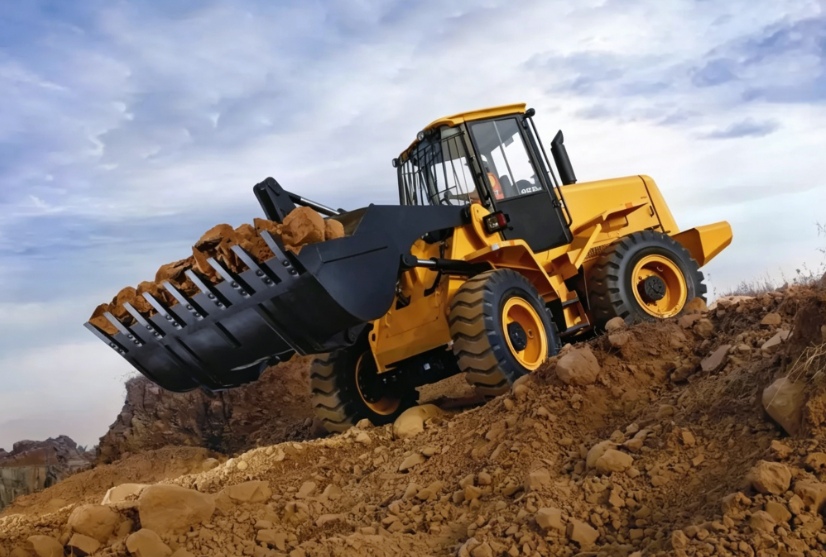
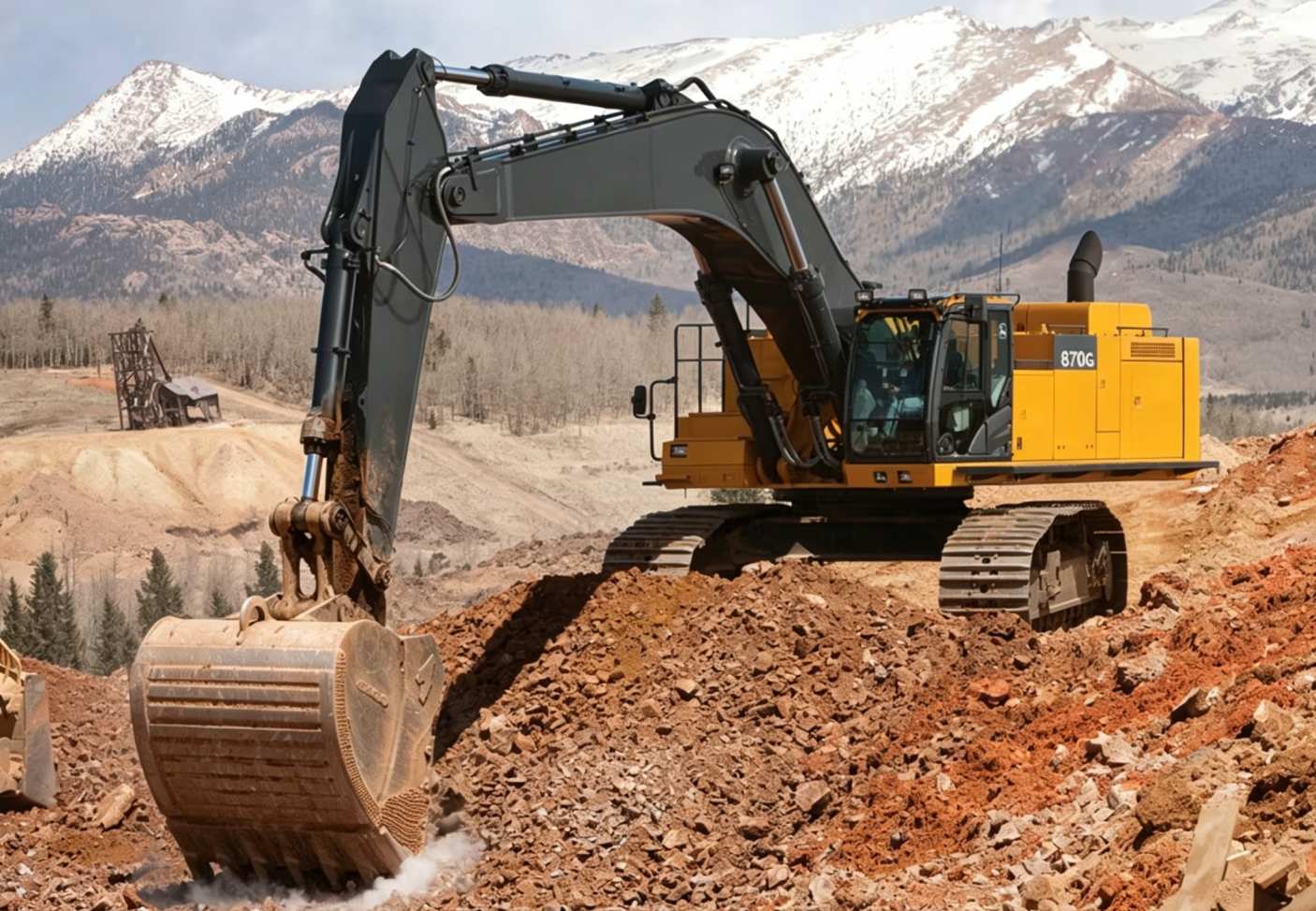
Imagine a powerful excavator digging into solid clay or a big farm machine working for sixteen hours continuously in hot weather conditions. Each small move of the mechanical arm, each rotation of the heavy-duty attachment, depends on a single engineering miracle of fluid mechanics, namely, a 4-way hydraulic directional control valve. For all fleet owners, mechanical engineers, and original equipment manufacturers, knowledge about the way in which such components distribute hydraulic power is crucial for increasing efficiency and minimizing downtime.
As a recognized leader in premium hydraulic components manufacturing worldwide, KYDAC offers tried-and-tested fluid control components designed specifically for such applications. Let’s get into the engineering secrets of the 4-way hydraulic valve and discover the way it drives industrial machines.
Decoding the Core Mechanics: What is a 4-Way Hydraulic Valve?
At its essence, a 4-way hydraulic valve is a directional control hub designed to manage the start, stop, and direction of fluid flow within a dual-acting hydraulic circuit. The “4-way” designation refers directly to the four distinct flow ports machined into the valve housing.
The 4 Essential Ports Defined
Every standard 4-way valve, including the highly adaptable KYDAC P Series and DCV Series monoblock valves, features four primary paths:
- P Port (Pressure): Connected directly to the hydraulic pump, serving as the inlet for high-pressure oil.
- T Port (Tank/Return): The exhaust pathway that channels spent, low-pressure oil back to the hydraulic fluid reservoir.
- A Port (Work Port A): Connects to one chamber of a double-acting cylinder or one side of a hydraulic motor.
- B Port (Work Port B): Connects to the opposing chamber or side of the actuator.
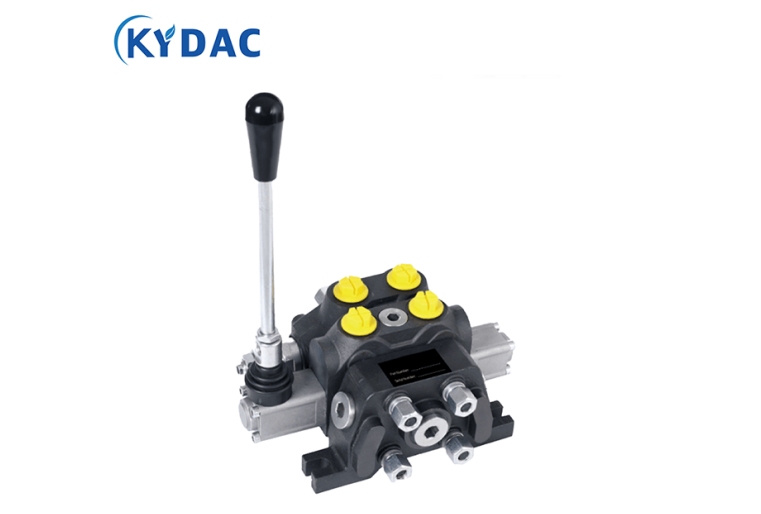
Spool Positions and Fluid Routing
Inside the heavy-duty cast iron body sits a precision-ground steel spool. Moving this spool linearly shifts the valve between multiple positions (typically 3 positions: extend, neutral, and retract):
- Position 1 (Extend): High-pressure oil flows from Port P to Port A, pushing the cylinder piston outward. Simultaneously, oil trapped on the opposite side escapes through Port B back to the return Tank Port T.
- Position 2 (Neutral): In a closed-center configuration, Ports P, T, A, and B are blocked. The fluid is locked, holding the mechanical load rigidly in place.
- Position 3 (Retract): The spool shifts the opposite way. High-pressure oil enters Port B, retracting the cylinder, while fluid from Port A drains back to Port T.
Overcoming Industrial Challenges with KYDAC Engineering
In concept, routing fluid seems simple. In actual industrial environments, it is a battle against high pressures, shocking vibration, and contamination.
Engineering Machinery: Boom and Bucket Control
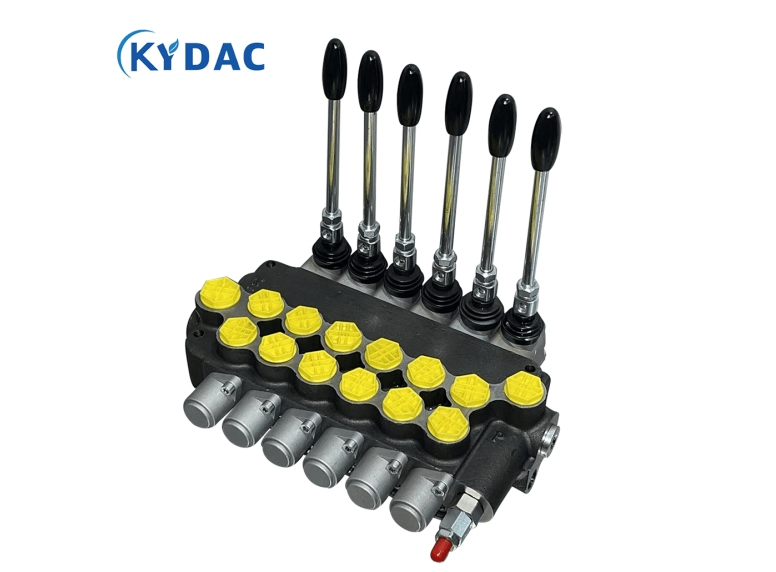
In wheel loaders and excavators, KYDAC BDL-40 and DCV100 series multi-way directional valves are deployed to execute complex, multi-circuit lifting movements.
- The Problem: Traditional lower-grade valves experience internal pressure drops, causing the mechanical arms to stutter or shudder under heavy loads, creating safety hazards.
- The KYDAC Solution: Our specialized monoblock design features advanced internal flow channels optimized via professional flow simulation. This ensures minimal pressure loss, providing smooth, highly predictable operation during simultaneous bucket tilting and boom lifting.
Agricultural Automation: Seamless Harvesting Attachment Execution
Modern combine harvesters require immediate, delicate adjustments of heavy headers over uneven terrain.
- The Problem: Slow valve response times lead to attachment damage or uneven crop cutting.
- The KYDAC Solution: Integrating KYDAC ZTL and ZDL series manual or cable-controlled valves allows operators to split and regulate oil flow precisely, safeguarding automated header height adjustments regardless of system pressure fluctuations.
Why Precision Manufacturing Dictates 4-Way Valve Reliability
The performance of a 4-way valve depends entirely on its structural integrity and manufacturing tolerances.
Eliminating Internal Leakage and Hydraulic Drift
A major headache for heavy equipment owners is “hydraulic drift”—where a crane boom or loader bucket slowly sags down due to internal fluid bypassing the spool. KYDAC solves this through extreme manufacturing rigor. Our facility utilizes advanced imported German and Japanese machining centers to grind spools to sub-micron tolerances, ensuring an exact micro-clearance between the spool and the valve body. Backed by an ISO/TS16949 certified quality management system, our valves effectively eliminate unwanted internal leakage under pressures exceeding 31.5 MPa.
Responsive Automation via Advanced Solenoid Actuation
For modern, smart automated production lines and heavy robotics, manual levers are replaced by electrical controls. KYDAC SD Series electromagnetic directional control valves utilize customized, rapid-response solenoids to shift the internal spool.
- Rapid Cycling: They provide shift times measured in milliseconds, ensuring precise positioning in high-speed manufacturing assembly lines.
- Rugged Coils: Engineered with high-insulation, water-resistant coils, they eliminate electrical burnouts common in wet, vibrating, or high-temperature outdoor environments.
Conclusion
A 4-way hydraulic valve is the defining brain behind active mechanical movement. Choosing a valve built with poor tolerances results in system heat generation, fluid degradation, and unexpected field failures.
Whether you are upgrading your current fleet of agricultural machinery or developing an entirely new fleet of industrial engineering machinery, KYDAC offers you high-quality and energy-efficient hydraulic systems manufactured for over 24 years, all coming with an industry-best 2-year warranty protection.
Looking forward to eradicating hydraulic drift and increasing your machinery efficiency? Then do not hesitate to contact our KYDAC engineering team and get your machinery product catalog along with a customized OEM quotation for your machinery.
FAQ
Q: What is the major difference in construction between a 3-way valve and a 4-way valve?
A: The 3-way valve has only one work port and hence can only be used with single-acting cylinders. The 4-way valve has two work ports, A and B, enabling it to control double-acting cylinders and reversible motors.
Q: When should I use a monoblock 4-way multi-way valve versus a sectional one for my mobile equipment?
A: Use the monoblock if you want a compact and reliable unit capable of handling higher pressures. Opt for the sectional version when you require the ability to modify the circuitry in the future.
Q: Why does a 4-way hydraulic directional control valve get stuck while working?
A: The fluid contaminants will block the spool. The other reason is thermal expansion caused by extremely high temperatures. Filtration and precision valves will prevent this problem.
Q: In what way does the closed-center design of the 4-way valve promote efficient performance?
A: It will block the pressure port when in the neutral position and will stop the flow of fluid into the actuator.
Leave a Message
If you are interested in any product, please contact us. We will introduce our products to you in more detail


