

Hydraulic Components for Forklifts: Valves, Pumps & Steering
Time : Sep 24, 2026 View : 152
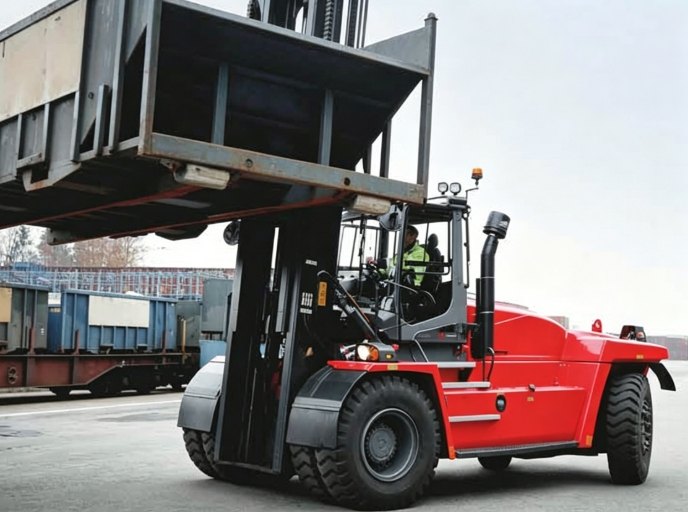
Today’s material handling calls for precise control, high-pressure strength, and smooth fluid power in heavy equipment. Solid forklift hydraulic parts affect lifting stability, steering response, attachment handling, and daily output levels.
- Heavy-load stability: Ensuring smooth mast lifting and tilting without jerky hydraulic drops under maximum capacity.
- Responsive steering: Achieving effortless control in narrow warehouse aisles through a dependable forklift hydraulic steering unit.
- Leak-free power delivery: Maintaining stable pressure and fluid delivery throughout the forklift hydraulic system during continuous high-cycle operation.
- Multi-attachment capability: Powering side-shifters, rotators, paper roll clamps, and other attachments through a properly configured forklift multi-way valve.
KYDAC supplies strong hydraulic parts for forklifts and similar machines. These parts handle tough daily demands in material handling work. As a forklift hydraulic manufacturer, KYDAC builds valves, pumps, and steering units that keep equipment running steadily.
Core Hydraulic System Architecture in Modern Forklifts
Understanding how fluid power translates into mechanical movement is essential for optimizing performance and selecting suitable forklift hydraulic components. A well-designed forklift hydraulic system relies on the synchronization of the forklift hydraulic pump, directional valves, cylinders, and steering circuit.
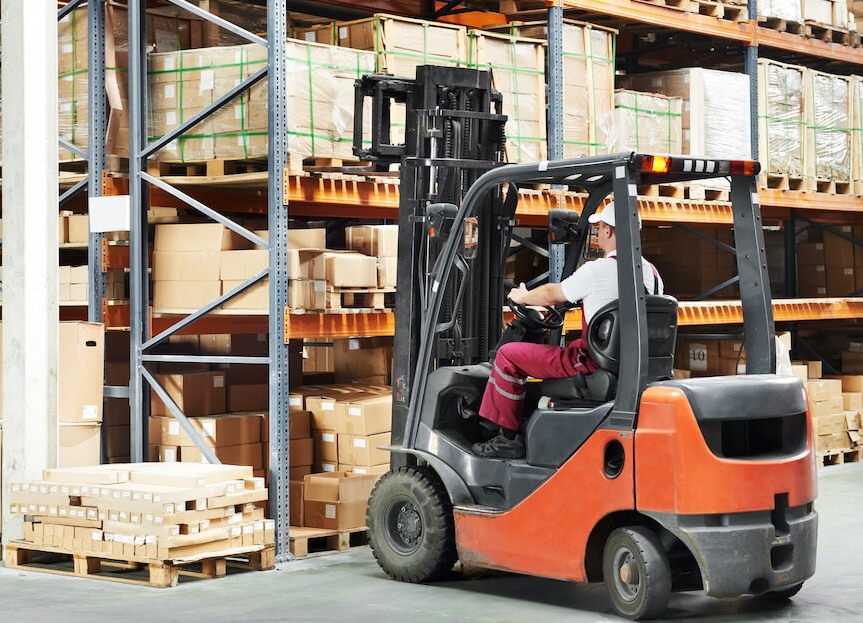
The Vital Role of Material Handling Hydraulic Components
Efficient material-handling hydraulic components influence the ability to carry loads, ease of operation, steering ability, and attachment operation.
- Power generation: The hydraulic pump for forklift applications provides hydraulic power for lifting, tilting, and auxiliary circuits by converting mechanical energy to hydraulic fluid power.
- Flow control: The forklift hydraulic valve regulates oil flow through various circuits in order to regulate mast lift, tilt, and attachment operations.
- Steering operation: The hydraulic steering circuit is used for safe steering response regardless of heavy lifting operations.
The pump, forklift hydraulic valve, and steering circuit make up the main parts of the forklift hydraulic circuit.
KYDAC Hydraulic Valves: Precision Control for Forklift Applications
As a dedicated manufacturer, KYDAC produces directional and flow-control products engineered for demanding forklift applications. Integrating the right hydraulic valve for forklift equipment can improve actuator response, attachment control, and system stability.
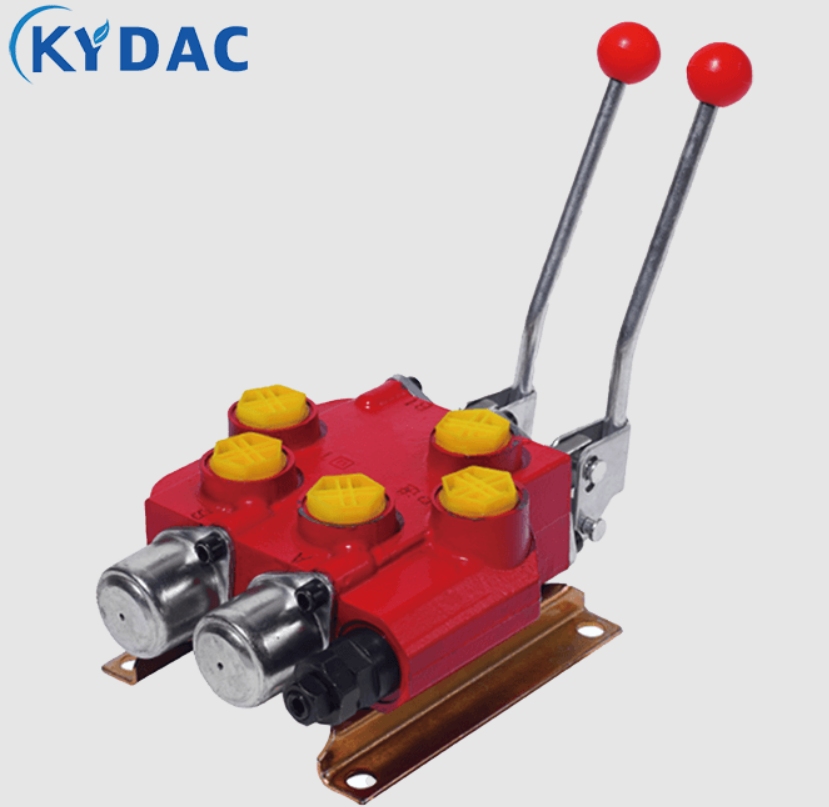
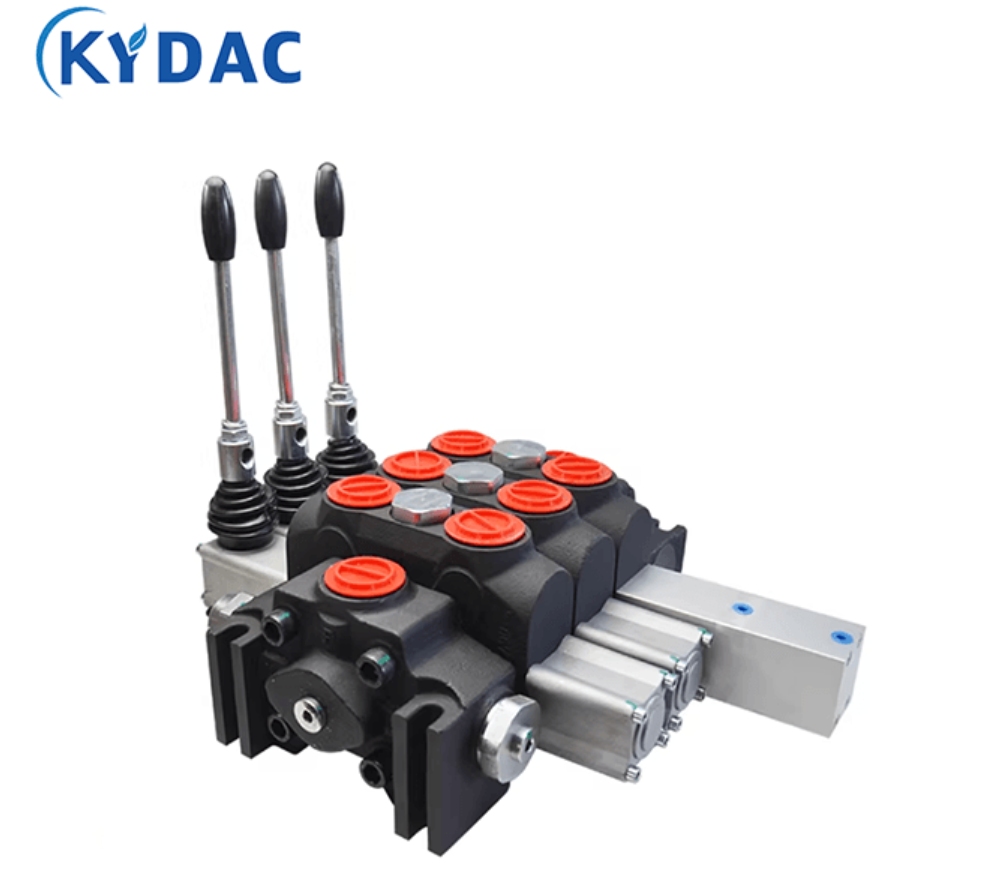
KYDAC ZDL20 Series Multi-Way Directional Control Valve
The ZDL20 is designed for primary mast functions and auxiliary circuits in medium-to-heavy forklifts, making it suitable as a central forklift multi-way valve.
- Technical specifications: Features a cast iron body, nominal pressure of 20 MPa, maximum working pressure up to 31.5 MPa, and nominal flow of 90 L/min.
- Application scenario: Installed as a forklift mast control valve to manage mast elevation, mast tilt, and side-shifter circuits.
- Problems solved: A properly matched forklift directional control valve helps maintain smoother cylinder control and reduces unstable movement during stacking operations.
For OEM applications, the ZDL20 can serve as a compact hydraulic valve for forklift designs that require several coordinated work sections.
KYDAC DCV100 Series High-Flow Sectional Valve
Designed for high-capacity handling machinery, the DCV100 series delivers modular flow control across multiple hydraulic circuits.
- Technical specifications: Supports working pressure up to 350 bar and flow rates up to 100 L/min, with 1 to 12 configurable valve sections.
- Application scenario: Functions as a heavy-duty forklift directional control valve or forklift multi-way valve in high-tonnage forklifts, container handlers, and reach stackers.
- Problems solved: Its sectional configuration helps distribute oil across multiple attachments and allows different work functions to be integrated into one valve bank.
For forklifts with several auxiliary functions, a modular forklift hydraulic valve simplifies circuit expansion compared with a fixed monoblock configuration.
Hydraulic Gear Pumps and Steering Units for Enhanced Maneuverability
Apart from directional control, a dependable forklift hydraulic system also needs steady fluid production and proper steering. Combining a strong forklift hydraulic pump with a precise forklift hydraulic steering system makes this possible.
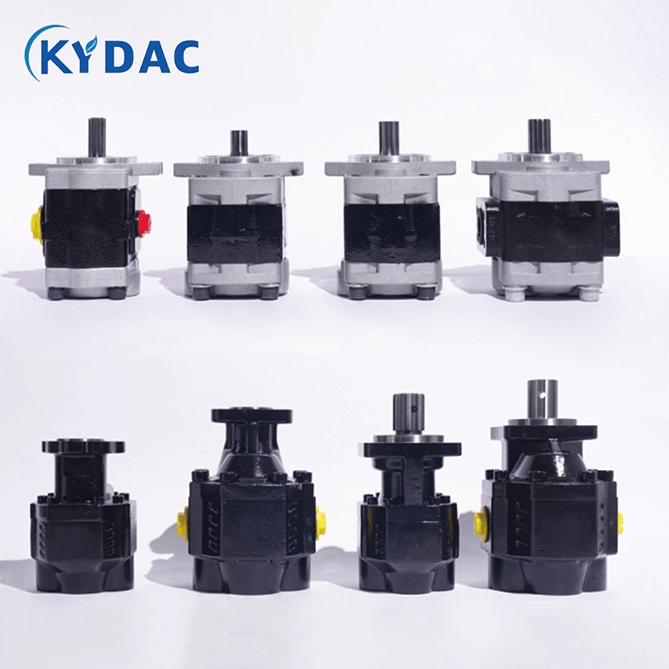
High-Pressure Forklift Hydraulic Gear Pumps
KYDAC gear pumps ensure constant hydraulic fluid delivery for lift, steering, and auxiliary duties.
- Technical features: Offered in 1P, 1.5P, 2P, and 2.5P ranges, featuring rugged construction and internal parts resistant to wear.
- Application scenario: For example, a gear pump in a forklift hydraulic system may serve as the primary pressure supplier for lift cylinders, mast control, steering circuit, and attachments.
- Problems solved: Adequate selection of the hydraulic pump for a forklift allows for steady flow and minimizes performance reduction due to internal fluid leakage and cavitation.
Choosing an appropriate forklift hydraulic pump involves displacement, speed, pressure, and anticipated system flow rate considerations.
Precision Forklift Hydraulic Steering Control Units
An accurate steering operation involves a sensitive hydraulic steering system for forklifts that converts the rotation of the steering wheel into hydraulic force output.
- Technical features: A smaller cycloid design can combine shock, suction, and relief functions to protect the system from damage.
- Application scenario: The forklift hydraulic steering control unit links the steering wheel to the steer axle cylinder to direct the turning operation.
- Problems solved: A functional forklift hydraulic steering system reduces steering lag, kickback, and operator effort in operating it.
The forklift hydraulic steering control unit becomes very significant in a narrow aisle environment in warehouses.
Why Choose KYDAC as Your Material Handling Hydraulic Partner
Selecting an experienced forklift hydraulic components manufacturer helps ensure product compatibility, long-term supply stability, and easier OEM replacement. KYDAC combines hydraulic engineering with quality control to provide material handling hydraulic components for a wide range of mobile equipment.
Manufacturing Excellence and Quality Control
KYDAC applies manufacturing and testing controls across valves, pumps, and steering components.
- Precision engineering: CNC machining supports controlled spool and housing tolerances in each forklift hydraulic valve.
- Performance testing: Forklift hydraulic components can be evaluated for pressure, sealing, flow, and operational function before shipment.
- OEM compatibility: Products can be configured for replacement or original-equipment applications across different forklift and material handling platforms.
Working with a dedicated forklift hydraulic components manufacturer also helps OEMs coordinate the forklift mast control valve, forklift hydraulic gear pump, and steering unit within one hydraulic architecture.
Partner with KYDAC for Reliable Fluid Power Solutions
Ready to upgrade your equipment with durable forklift hydraulic components? KYDAC supports OEMs, distributors, and equipment operators with forklift hydraulic valves, forklift hydraulic pumps, forklift hydraulic steering units, and related material handling hydraulic components.
Contact KYDAC today to request technical specifications, OEM customization support, or quotations for your forklift hydraulic system requirements.
FAQ
Q: What makes the lifting speed slow in a forklift hydraulic system?
A: Slow lifting in a forklift hydraulic system could occur due to inadequate oil quantity, contaminated filters, damaged seals, leakage from within the forklift hydraulic valve, and low output from the forklift hydraulic gear pump.
Q: How do I choose the right forklift directional control valve?
A: The selection process of choosing the right forklift directional control valve involves matching operating pressure, flow rate, number of spools, actuator operation, center condition, and other attachments. A forklift multi-way valve is often chosen if several operations have to be controlled via one valve bank.
Q: What makes forklift steering heavy?
A: Heavy steering is a problem that could happen because of insufficient pump flow, leakage, issues with the steering cylinder, and wear within the forklift hydraulic steering unit. The forklift steering control unit and flow control elements should be checked together.
Q: Is it possible to incorporate more hydraulic operations into an already existing forklift?
A: Yes. Extra operations can be incorporated through the installation of a forklift multi-way valve, sectional control valve, or selector valve, assuming that the hydraulic pump of the forklift and the entire hydraulic system have enough flow and pressure capabilities.
Q: What makes up the basic components of the forklift hydraulic system?
A: The basic components of the forklift hydraulic system include a hydraulic pump for the forklift, forklift mast control valve, cylinders, hoses, reservoir, filter elements, and hydraulic steering system for the forklift.
Leave a Message
If you are interested in any product, please contact us. We will introduce our products to you in more detail


